Tasmania leads the nation as new brands and plug-ins reshape the island market
The smallest mainland-connected market in the country posted the strongest growth in August. The composition of that growth is what should interest members.
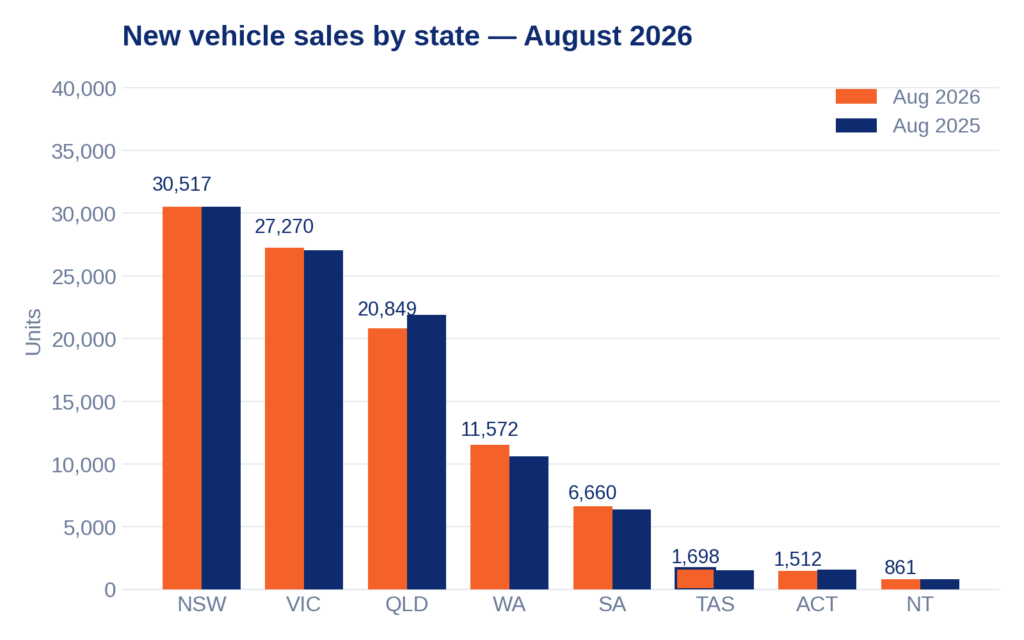
Tasmania delivered 1,698 new vehicles in August 2026, up 9.3% on the same month last year. No other state or territory came close on a percentage basis. Western Australia managed 8.7%, South Australia 4.0%, and Queensland went backwards by 4.8%.
The year-to-date position is just as strong: 13,221 vehicles, up 5.5%, again the best result in the country. That is worth putting in context. The national market has sold 811,388 vehicles this year, 1,059 fewer than in 2025. Tasmania accounts for 1.7% of national volume, yet contributed more than a third of the country’s growth for the month.
A word of caution before the detail. Tasmania sells fewer vehicles in a month than Victoria sells in a day. Small absolute numbers produce large percentage swings, and a single fleet order can move a segment by fifty per cent. The year-to-date columns are the reliable signal here.
With that said, four things stand out.
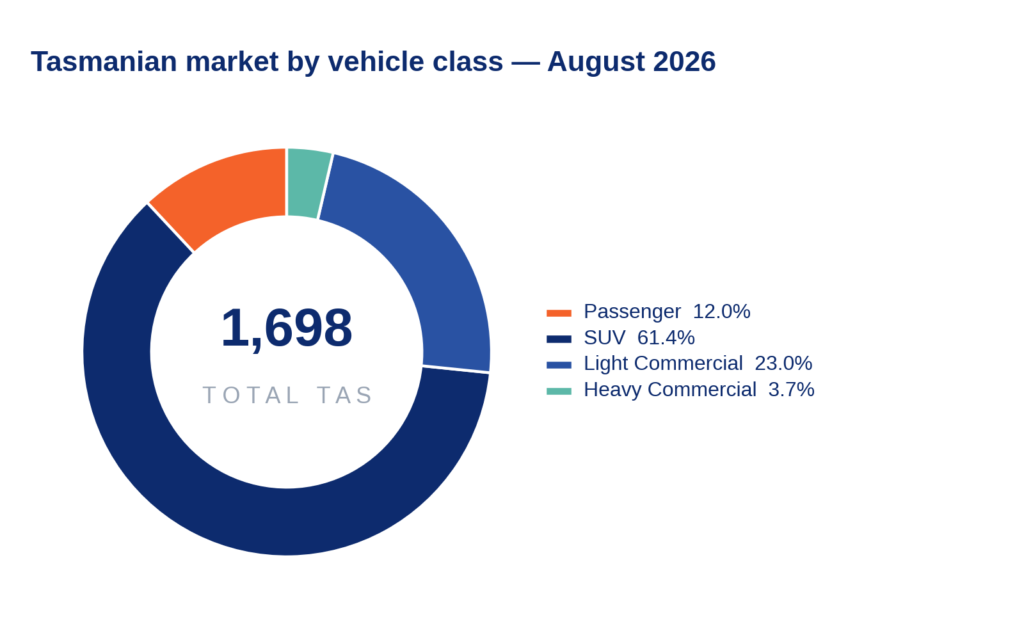
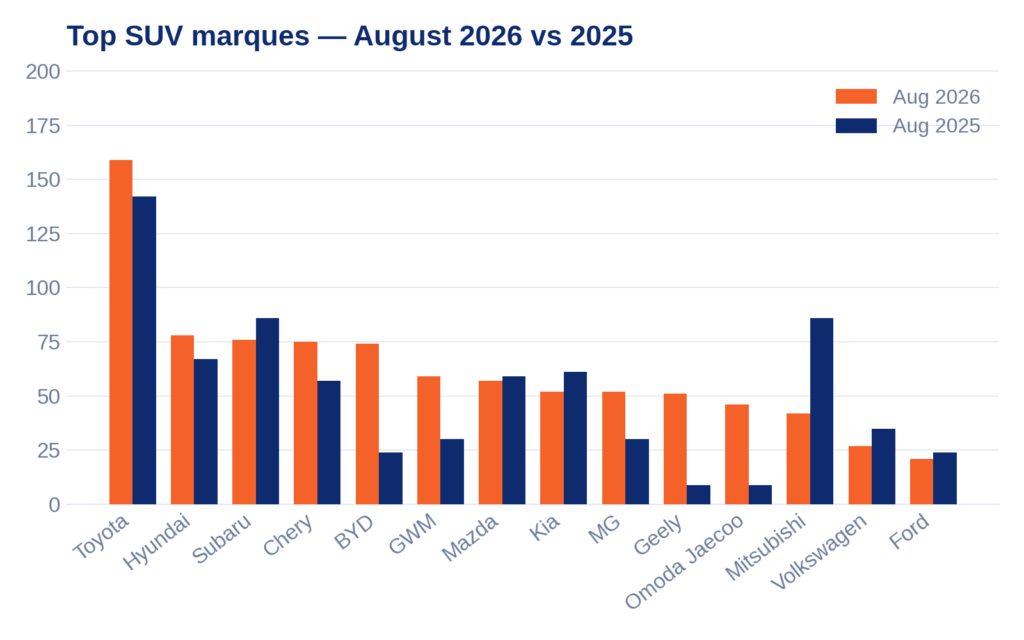
Growth is unusually broad. SUVs rose 21.3% to 1,093 units and took 62.2% of the market. More striking, passenger cars — a class in structural decline nationally for a decade — grew 43.2% to 212 units. The light car segment tripled from 24 units to 74, with the Geely EX2 and BYD Atto 1 accounting for 45 of them. Both are battery electric, and neither was available here a year ago.
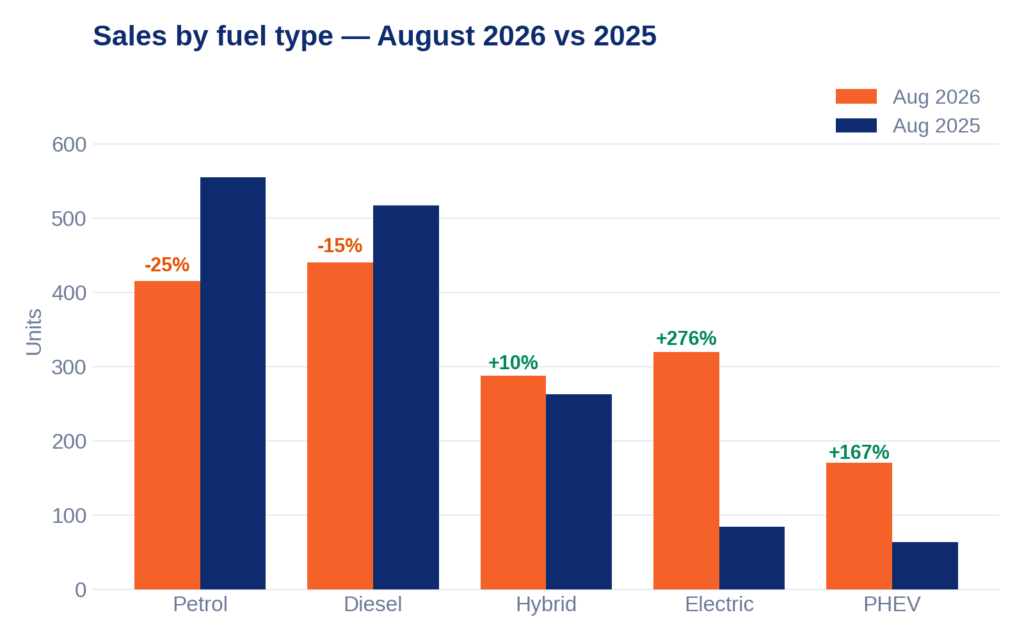
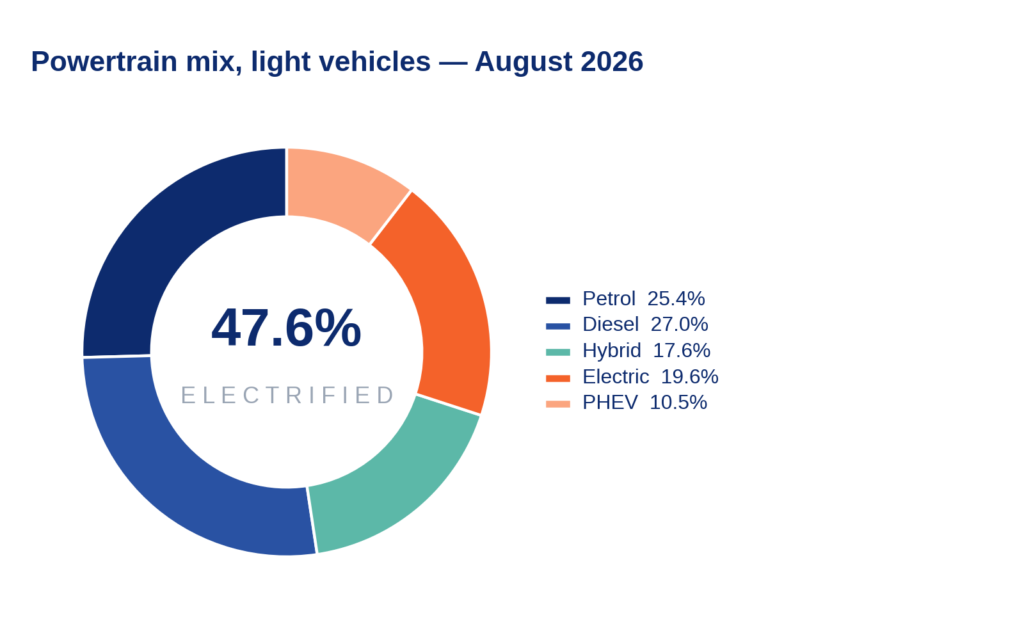
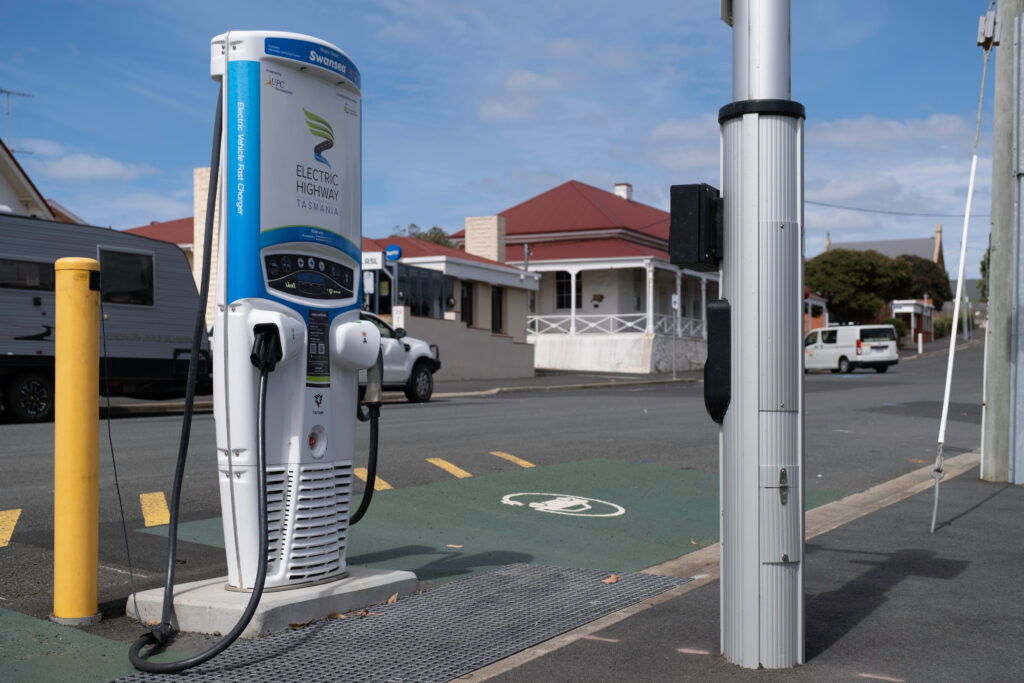
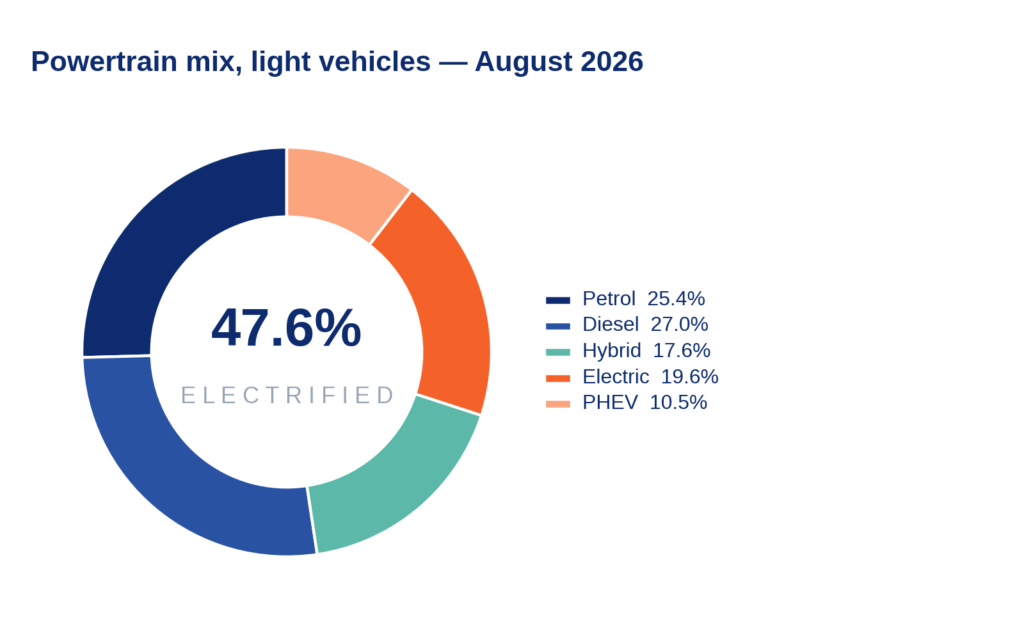
Electrification is moving faster than most would assume. Battery electric vehicles reached 379 units in August, 22.4% of Tasmanian light-vehicle sales and up 282.8% year-on-year. Plug-in hybrids added 171. Plug-in vehicles now represent 32.4% of light-vehicle sales and electrified powertrains of all kinds 49.4% — within a whisker of half. Pure internal combustion has fallen from 71.6% to 50.6% in twelve months, and on current trajectory the state passes the halfway mark before Christmas.
Those figures include Tesla and Polestar volumes, which are reported separately from VFACTS through the Electric Vehicle Council. Tasmania took 57 Tesla and two Polestar registrations in August. The Tesla Model Y at 49 units is now the third best-selling SUV in the state, behind the Toyota RAV4 and Chery Tiggo 4 Pro.
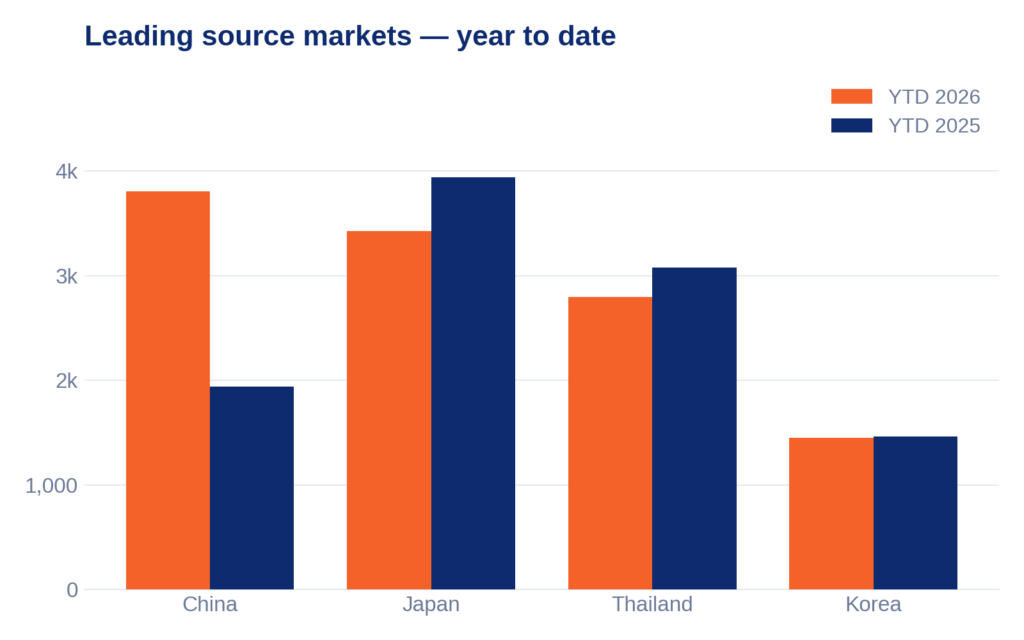
China has overtaken Japan. Chinese-built vehicles reached 614 units, 34.9% of the Tasmanian market and up 117.7% year-on-year. Japan fell 8.2% to 427. Fifty-one marques recorded sales here in August, and ten of them sold nothing at all a year ago.
Commercial demand softened. Light commercials fell 13.1% to 390 units and heavy commercials 11.4% to 62. The 4×4 pick-up remains far more central here than on the mainland — 18.3% of all Tasmanian sales against 9.9% in Victoria — so its 12.5% contraction carries more weight locally. Business buyers were flat at 602 units while private buyers rose 23.4%.
One clear positive for members: rental deliveries are up 92.4% year-to-date to 608 units, consistent with tourism fleet renewal. That is a predictable stream of servicing, tyre and de-fleet work.